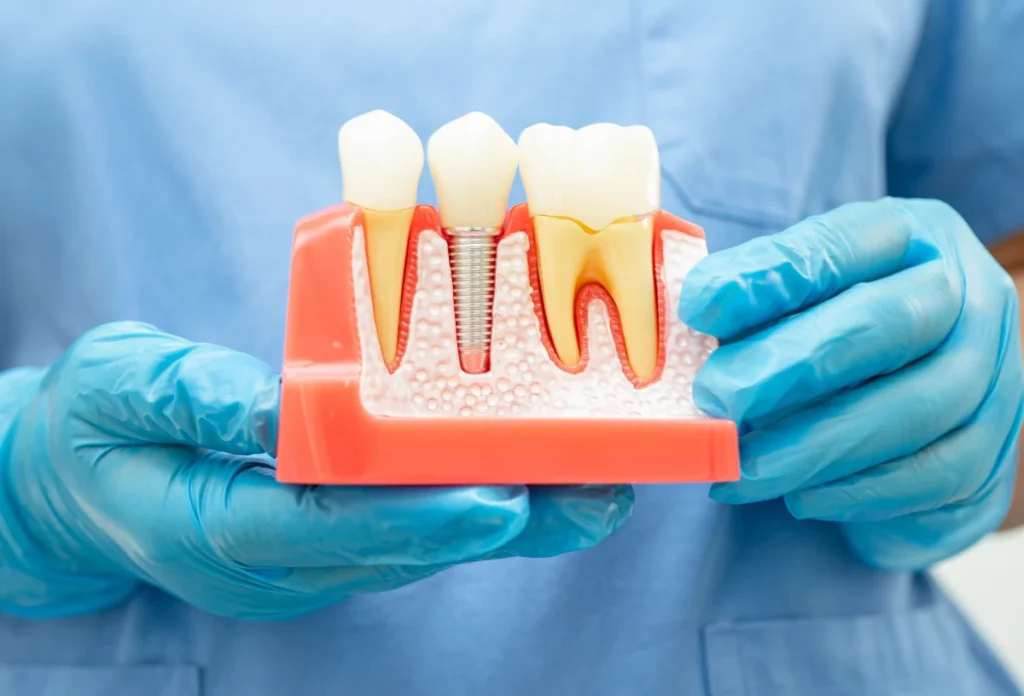
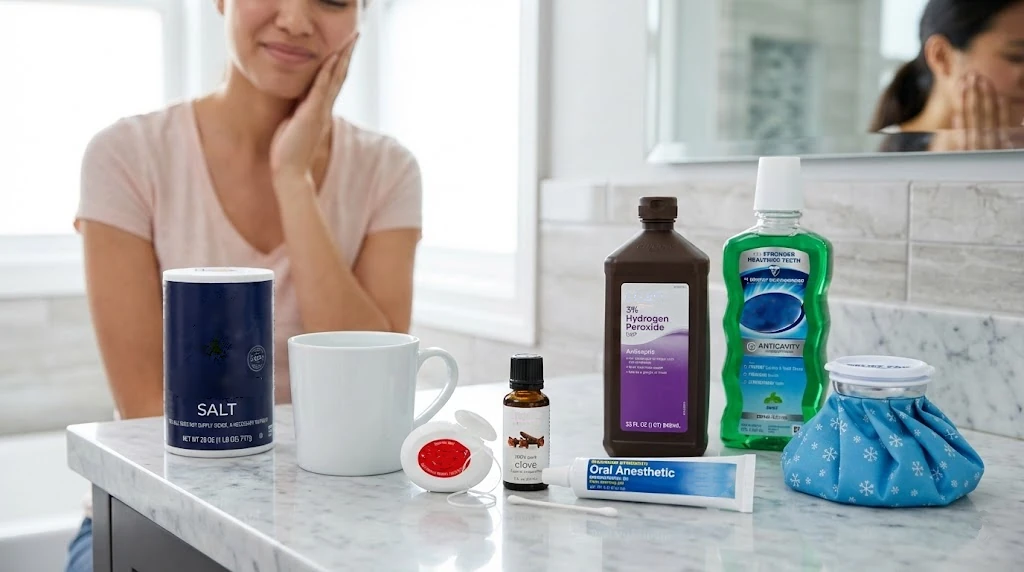
This guide focuses on safe, widely recommended home remedies that may help reduce pain and irritation temporarily while you arrange professional dental care.
Important: Home remedies are first aid—not treatment. If tooth pain lasts more than a day or two, worsens, or is accompanied by swelling, fever, or a bad taste in the mouth, see a dentist as soon as possible.
When a Toothache Is an Emergency
Seek urgent dental or medical care if you experience any of the following:
- Facial or jaw swelling
- Fever
- Difficulty swallowing or breathing
- Severe, persistent pain
- Pus, drainage, or a foul/bad taste in the mouth
Dental infections can spread beyond the tooth and require immediate attention.
What Causes Tooth Pain?
Tooth pain can come from several common issues, including:
- Tooth decay (cavities)
- Gum disease or gum irritation
- Food trapped between teeth
- Cracked or fractured teeth
- Loose or failing fillings
- Exposed tooth roots or sensitivity
- Dental abscesses (infection)
Because many dental problems tend to worsen over time, getting professional care early is usually the safest (and least expensive) path.
Proven Home Remedies for Toothache Relief (While You Wait)
The home remedies below appear consistently across trusted dental and medical sources and have a legitimate mechanism of action. They are designed to help you reduce pain, inflammation, and irritation temporarily—while you book a dental appointment.
1) Rinse With Warm Salt Water
Salt water is a mild disinfectant and may help reduce inflammation and loosen debris.
How to use:
- Mix ½ teaspoon of salt into 1 cup of warm water.
- Gently swish for 30 seconds, then spit.
- Repeat several times per day, especially after meals.
2) Gently Floss and Clean the Area
Food particles or plaque trapped between teeth can cause significant pain and pressure.
- Floss gently around the painful tooth to remove trapped debris.
- Rinse afterward (salt water is a good choice).
- If flossing causes sharp pain or bleeding that doesn’t stop, stop and get dental advice.
3) Use a Fluoride Rinse
Fluoride may help strengthen weakened enamel and reduce sensitivity.
- Use an over-the-counter fluoride rinse (example: ACT®).
- Follow the product directions.
- Many people find it most helpful after brushing and before bed.
4) Apply a Cold Compress
Cold can reduce inflammation and temporarily numb pain.
How to use:
- Wrap an ice pack or cold compress in a cloth.
- Apply to the outside of the cheek near the painful area.
- Use for 15–20 minutes at a time.
5) Clove Oil (Eugenol)
Clove oil contains eugenol, a natural anesthetic with antibacterial properties. Many people use it for short-term tooth pain relief.
How to use safely:
- Apply a small amount to a cotton swab.
- Gently dab onto the affected area.
- Avoid swallowing and do not over-apply.
6) Temporary Oral Numbing Gels (Use With Caution)
Over-the-counter numbing gels may provide short-term relief.
Caution: Products containing benzocaine should be used only as directed and are not recommended for young children without professional guidance.
- Use only a small amount and only as often as the label allows.
- Do not apply repeatedly over large areas.
- Stop use if irritation occurs.
7) Hydrogen Peroxide Rinse (Diluted Only)
A diluted hydrogen peroxide rinse may help reduce bacteria and plaque buildup.
How to use:
- Mix equal parts 3% hydrogen peroxide and water.
- Swish briefly and spit—do not swallow.
- Rinse with plain water afterward.
What to Avoid
- Applying aspirin directly to gums or the tooth (can burn soft tissue).
- Overusing numbing products to the point you delay needed care.
- Very hot or very cold foods/drinks if the tooth is sensitive.
- “Remedies” without credible support or that require hard-to-find plants/ingredients.
If any remedy causes burning, irritation, or increased pain, stop using it and seek dental advice.
Why Seeing a Dentist Matters
Toothaches rarely resolve on their own. Delaying care often leads to:
- More extensive procedures
- Higher costs
- Increased risk of infection
Professional treatment—such as a filling, root canal, or crown—addresses the cause of pain rather than masking symptoms.
Frequently Asked Questions (FAQ)
How long should a toothache last before I see a dentist?
If tooth pain lasts more than 24–48 hours, worsens, or keeps returning, you should see a dentist as soon as possible. Toothaches rarely resolve on their own and often indicate decay or infection that will continue to progress without treatment.
Can home remedies cure a toothache?
No. Home remedies can temporarily reduce pain or irritation, but they do not treat the underlying cause, such as cavities, infections, or damaged restorations. Professional dental care is required for a lasting solution.
Is it safe to use clove oil for tooth pain?
Clove oil can be safe when used sparingly and correctly. Apply a small amount with a cotton swab and avoid swallowing. Do not use excessively or on broken tissue.
Are oral numbing gels like Orajel safe?
Over-the-counter numbing gels may provide short-term relief, but they should be used only as directed. Products containing benzocaine are not recommended for young children and should not be applied repeatedly or in large amounts.
Should I rinse with hydrogen peroxide for a toothache?
A diluted hydrogen peroxide rinse (equal parts 3% peroxide and water) may help reduce bacteria. Do not swallow it, and rinse with plain water afterward. Avoid frequent or long-term use.
Can flossing really help tooth pain?
Yes. Food or plaque trapped between teeth is a common cause of irritation and pain. Gentle flossing and rinsing can reduce discomfort if debris is contributing to the problem.
What are signs that a toothache could be serious?
Seek urgent care if tooth pain is accompanied by facial or jaw swelling, fever, difficulty swallowing or breathing, or pus/drainage and a bad taste. These can be signs of a dental abscess or spreading infection.
Will delaying dental care make things worse?
Often, yes. Delaying treatment can lead to more complex procedures, higher costs, and increased risk of infection. Early care is typically simpler and less expensive.
Additional Reading & Trusted Sources
- Mayo Clinic – Toothache: First Aid
https://www.mayoclinic.org/first-aid/first-aid-toothache/basics/art-20056628 - WebMD – Toothache Relief and Home Remedies
https://www.webmd.com/oral-health/home-remedies-toothache - Colgate Oral Health Center – 10 Homemade Toothache Remedies
https://www.colgate.com/en-us/oral-health/cavities/four-homemade-toothache-remedies - Healthline – Home and Natural Remedies for Toothache Pain
https://www.healthline.com/health/dental-and-oral-health/home-remedies-for-toothache
Toothache pain is your body’s warning signal. Home remedies may help you get through the next few hours or days, but the safest (and usually least expensive) outcome comes from getting treated sooner rather than later. If cost is what’s slowing you down, a dental discount plan can help reduce the price of exams, X-rays, fillings, crowns, and more—so you can book the appointment you need without waiting.